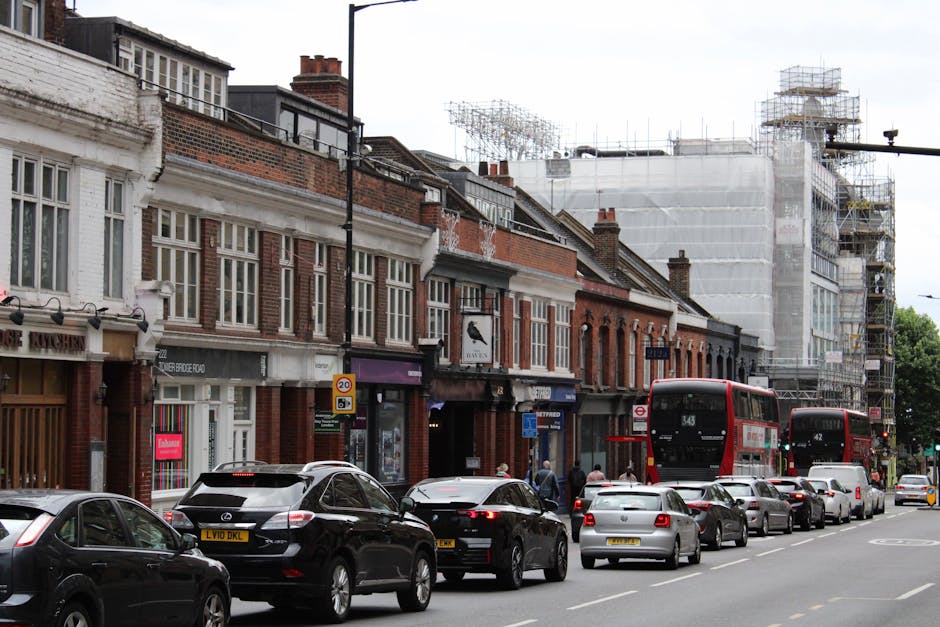
Stockwell Station man and van removals near Clapham Road
If you are planning Stockwell Station man and van removals near Clapham Road, you are probably after something that feels simple on paper but a bit more awkward in real life. Tight streets, limited stopping space, stairs in older buildings, and the usual London timing pressure can turn a small move into a long day. The good news is that a well-organised man and van service can make the whole thing calmer, quicker, and far less of a faff.
This guide explains what the service usually involves, who it suits, what to check before booking, and how to avoid the little mistakes that cause delays. We will also look at planning around Stockwell Station and the Clapham Road area, which matters more than people sometimes expect. Truth be told, half of a smooth move is just good preparation.
Table of Contents
- Why Stockwell Station man and van removals near Clapham Road Matters
- How Stockwell Station man and van removals near Clapham Road Works
- Key Benefits and Practical Advantages
- Who This Is For and When It Makes Sense
- Step-by-Step Guidance
- Expert Tips for Better Results
- Common Mistakes to Avoid
- Tools, Resources and Recommendations
- Law, Compliance, Standards, or Best Practice
- Options, Methods, or Comparison Table
- Case Study or Real-World Example
- Practical Checklist
- Conclusion
- Frequently Asked Questions
Why Stockwell Station man and van removals near Clapham Road Matters
Moves near Stockwell Station and Clapham Road sit in one of those classic London spots where location really does shape the experience. You are close to busy transport routes, you may have pedestrians passing constantly, and there is often a mix of flats, maisonettes, terraces, and small businesses all in the same stretch. That creates a practical challenge: the move has to work around the street, not the other way round.
For smaller or medium-sized relocations, a man and van setup is often the most sensible option. It is usually faster to arrange than a full-scale removals team, easier to adapt if your load changes, and better suited to jobs where access is a bigger issue than raw volume. Need to move a sofa, a few boxes, a bed frame, and a couple of bulky bags? That is exactly the sort of job where this service earns its keep.
What matters near Clapham Road is not just the transport. It is timing, parking, packing order, and how carefully items are carried through shared hallways or narrow staircases. A good move feels almost boring. Boxes go out, furniture goes in, job done. And boring is lovely on moving day.
If you are comparing options, it can help to look at broader support too, such as removals for larger jobs or flat removals when stairs, lifts, and access are part of the equation. For many households, the right answer is not "the biggest service", but the one that fits the building and the load.
How Stockwell Station man and van removals near Clapham Road Works
In simple terms, a man and van removal service provides a vehicle, a driver, and usually one or more helpers to load, transport, and unload your items. The exact setup varies. Some jobs need two people. Some need more. Some are quick single-trip collections; others involve multiple stops, careful packing, and a bit of problem-solving at both ends.
Near Stockwell Station, the process often starts with access questions. Where can the van stop? Is there a loading bay? Is the property on a busy stretch of Clapham Road, or tucked behind a side street? Is there a lift, or are there three floors of stairs and a landing that narrows at the worst possible moment? These details matter because they affect the time, the equipment, and sometimes the vehicle size.
Typical steps are straightforward:
- You explain what needs moving, including any awkward items.
- The service estimates vehicle size, labour, and time.
- You confirm access details for both collection and delivery.
- The team arrives, protects the items as needed, and loads carefully.
- Everything is transported and unloaded in the correct order.
That last point sounds minor, but it saves time. If your sofa is going into the living room first, put it on the van in a way that lets it come off first. It sounds obvious. Yet moving day brain has a funny way of making obvious things less obvious.
For certain moves, you may also want extra support such as packing and boxes or packing and unpacking services. Those services are especially helpful if you are juggling work, childcare, or a deadline that has already become a headache.
Key Benefits and Practical Advantages
A good man and van service offers more than transport. It gives you flexibility, pace, and a more realistic way to move items through a built-up London area. That is especially useful around Clapham Road, where short notice plans and awkward access are pretty normal.
- Flexible for small-to-medium loads: ideal when you do not need a full lorry.
- Better for mixed items: boxes, furniture, appliances, and personal belongings can all be combined.
- Often quicker to organise: useful if your timeline is tight.
- More adaptable with access: handy when parking or entry is tricky.
- Less wasteful for modest moves: you are not paying for a massive vehicle you will barely fill.
There is also a psychological benefit, which people do not mention enough. When you know the move is properly covered, your mind stops spinning around all the tiny what-ifs. Can the wardrobe fit through the door? Will the mattress bend? Where did that one box with the kettle go? A sensible team reduces that background stress.
If you need something more specialised, there are related options worth understanding. For example, removal van arrangements can suit larger household loads, while man with a van and man with van are useful phrases people search when they want the same kind of practical, small-scale moving support. The wording changes; the underlying need is usually the same.
Who This Is For and When It Makes Sense
This kind of service is a strong fit for people who need practical help without overcomplicating the move. It is not only for "small jobs", either. Sometimes a bigger home move is still best handled in stages, especially if access is awkward or the move date has been split.
It often makes sense for:
- tenants moving in or out of flats near Stockwell Station
- students shifting rooms or shared houses
- young professionals moving furniture and boxes on a budget
- households with a few large items and plenty of packed belongings
- small businesses moving stock, files, or equipment
- people needing a same-day collection or delivery
If you are moving out of a flat, house removals may be more than you need, but it is worth knowing the difference. A one-bedroom flat with a lift and light furniture is very different from a family home with a full loft, garden tools, and a heavy dining table. Same service category, very different day.
Students in particular tend to benefit from a straightforward service because they are often moving between addresses that are not long-term homes. If that sounds familiar, student removals can be a useful fit, especially at the start or end of term when time is limited and everyone seems to be moving at once.
Step-by-Step Guidance
If you want the move to go well, the planning is what carries you. Not glamorous, but true. Here is a simple approach that works for most Stockwell Station and Clapham Road moves.
- List what is moving. Break it into furniture, boxes, fragile items, and anything unusually large.
- Measure the awkward pieces. Wardrobes, sofas, headboards, desks, and appliances are the usual suspects.
- Check access at both addresses. Note stairs, narrow halls, entry codes, lift availability, and parking limits.
- Decide whether you need help packing. If you do, make that part of the plan early.
- Book the right vehicle and crew. Do not assume a small van will cope with a larger load.
- Prepare the properties. Clear corridors, protect floors if needed, and keep keys, documents, and valuables with you.
- Label boxes clearly. Room labels are better than vague notes like "stuff". We have all done it, but still.
- Load in a sensible order. Put fragile or high-priority items where they can be accessed safely.
- Unpack the essentials first. Kettle, charger, bedding, toiletries, and important paperwork should not disappear into a random box mountain.
One small but useful trick: keep one box of immediate essentials separate and visible. It saves a lot of rummaging at 10pm when you are too tired to think straight.
Expert Tips for Better Results
Here is where little details make a big difference. These are the kinds of things that often get overlooked until the van is outside and everyone is already slightly sweaty and impatient. Lovely.
- Choose the time slot carefully. Early windows often help if you want to avoid the busiest periods around Stockwell and Clapham Road.
- Tell the mover about difficult access up front. Hidden staircases are not a fun surprise.
- Protect corners and surfaces. Door frames, bannisters, and furniture edges can all take a knock if you are not careful.
- Separate fragile pieces. Mirrors, lamps, glass shelves, and TVs deserve their own plan.
- Keep a realistic load estimate. People often underestimate how many boxes they have. Not a complaint, just human nature.
- Have a backup plan for parking. Streets near stations can get busy fast, especially later in the morning.
It also helps to think like a mover for five minutes. What will be first out? What would be hardest to carry? What needs to stay upright? A little planning here stops the whole thing turning into a shuffle.
If you are moving a business load rather than household items, office removals and commercial moves may be more relevant. Office desks, monitors, archive boxes, and chairs need a more structured approach than a casual load-in-and-go. Different game entirely.
Common Mistakes to Avoid
Most moving problems are predictable, which is both annoying and useful. Annoying because they keep happening. Useful because they can be prevented.
- Booking too late: especially risky if you are moving at the weekend or near month-end.
- Underestimating the load: the "it should all fit" approach can create a second trip.
- Ignoring access problems: a large van may be useless if the street cannot accommodate it.
- Packing without labels: this makes unloading slower and unpacking messier.
- Mixing fragile items with heavy ones: that is how chipped plates and bent lampshades happen.
- Forgetting insurance and terms: you should always know what is covered and what is not.
- Leaving everything until the last hour: the classic moving-day scramble. Nobody enjoys it.
Another easy mistake is assuming all man and van jobs are identical. They are not. The best operator for a straightforward sofa collection is not always the same setup you would choose for a full flat move. Ask yourself: what am I really moving, and how difficult is the access? That question alone clears up half the confusion.
Tools, Resources and Recommendations
You do not need fancy kit, but a few practical tools make moving day much smoother. A sensible setup often includes:
- strong cardboard boxes in matching sizes where possible
- packing tape and a tape dispenser
- marker pens for room labels
- bubble wrap or paper for delicate items
- blankets or covers for furniture protection
- straps or ties where suitable
- a folder for keys, tenancy papers, or important documents
For many people, the useful support is not just the vehicle but the service around it. If you want to understand value before booking, have a look at pricing and quotes so you know how the service is usually put together. If payment confidence matters to you, payment and security is worth checking as part of the decision-making process.
And if the move is part of a bigger home transition, home moves can give a broader sense of how household relocation support is structured. That is useful when the simple version of the plan has quietly become a more involved one.
Law, Compliance, Standards, or Best Practice
For removals work in London, the practical side and the compliance side go hand in hand. You do not need to become an expert overnight, but you should expect any professional mover to take safety, insurance, and fair handling seriously.
At a minimum, best practice usually means:
- careful handling of goods and property
- clear communication about what is included
- appropriate vehicle loading and securing of items
- attention to access, lifting, and trip hazards
- transparent terms before work begins
- appropriate insurance arrangements for the type of job being done
It is also wise to check that a mover has a clear approach to health and safety. Moving heavy furniture through narrow hallways is exactly the sort of task where good habits matter. A rushed lift can damage a wall, a cabinet, or a back. Nobody wants that afternoon.
For peace of mind, you may also want to read the company's health and safety policy, insurance and safety information, and terms and conditions. These pages help set expectations clearly, which is always better than assuming. Clear beats vague. Every time.
Where environmental handling matters, recycling and sustainability can be relevant too, particularly if you are disposing of unwanted furniture, packaging, or items that should be kept out of general waste. If the move involves old sofas, wardrobes, or broken household pieces, asking how they are handled is just sensible.
Options, Methods, or Comparison Table
Different move types call for different levels of support. If you are deciding between a small van job, a fuller removals service, or a specialist option, the table below gives a simple comparison.
| Option | Best for | Typical strengths | Possible drawback |
|---|---|---|---|
| Man and van | Small to medium moves, local collections, flexible jobs | Quick to arrange, practical, good for mixed loads | May be less suitable for very large or complex moves |
| Removal van | Household moves with more volume | More space, better for full rooms of furniture | Can be more than you need for a small load |
| Full removals service | Large homes, full relocations, complicated access | More manpower, more structure, less lifting stress for you | Usually unnecessary for simple, lighter moves |
| Specialist support | Fragile, heavy, or unusual items | Better handling for specific items | Only worthwhile when the item genuinely needs it |
For heavy or awkward belongings, it can also help to look at furniture removals or, in some cases, piano removals. Not every item needs specialist care, but some really do. A piano is not something you want to "just sort of wing".
Case Study or Real-World Example
Imagine a typical weekday move near Clapham Road. A renter is leaving a second-floor flat close to Stockwell Station and moving a short distance across south London. The load is modest: a bed, a small sofa, a desk, eight boxes, a mirror, and a couple of kitchen crates. Nothing outrageous, but the building has a narrow staircase and the road outside gets busy later in the morning.
In that situation, the most efficient approach is usually a well-timed man and van booking with clear access notes. The mover knows in advance that parking will be tight, so the arrival time is arranged earlier. The renter has already labelled boxes by room and kept fragile items separate. The sofa comes out first, the bed frame is wrapped, and the boxes are loaded last so they can be unloaded in the right order at the new place.
What makes the difference here is not brute force. It is sequencing. No wasted movement, no guessing, no last-minute hunt for tape. The move still takes effort, of course, but it feels under control. And that changes the whole experience. You notice it in small ways: fewer raised voices, less clattering, fewer "where did I put that?" moments.
That is the real value of a good local service. It keeps the day moving without making you feel like you are negotiating with your own furniture.
Practical Checklist
Use this before moving day. It is simple, but it covers the things people forget most often.
- Confirm the moving date and arrival window
- Check the van size suits the load
- Share access details for both properties
- Reserve parking or loading space if needed
- Label all boxes clearly by room
- Separate fragile and valuable items
- Disassemble furniture where practical
- Pack an essentials box for the first night
- Keep keys, ID, and documents with you
- Review insurance, terms, and payment details in advance
- Clear hallways and doorways before the crew arrives
- Have contact numbers ready in case timing changes
Expert summary: the smoother your access, packing, and timing, the more value you get from a man and van service. Near Stockwell Station, that is even more true because the street environment can change quickly. Plan the move around the location, not just the items.
Conclusion
Stockwell Station man and van removals near Clapham Road are at their best when the move is treated as a practical logistics job, not just a lift-and-drive task. The route, the access, the packing, and the timing all matter. Once you get those pieces lined up, the whole process becomes noticeably easier.
Whether you are moving a flat, a student room, a few bulky pieces, or a small business load, the smartest approach is usually the one that matches your exact situation. Not overkill. Not underdone. Just right for the job.
If you want to take the next step, review the service details, check the related support pages, and make sure your moving plan feels realistic before the day arrives. A calm move is still possible, even in London. Maybe especially when you keep it simple.
Get a free quote today and see how much you can save.
Frequently Asked Questions
What does man and van removals near Stockwell Station usually include?
It usually includes a vehicle, a driver, and one or more helpers to load, transport, and unload your belongings. The exact level of support depends on the size of the move and the access at both ends.
Is a man and van service suitable for a flat move near Clapham Road?
Yes, especially if you are moving from a one-bedroom or smaller flat, or if you do not have a huge amount of furniture. For bigger flats or more complex access, you may want a broader removals service instead.
How far in advance should I book a move in Stockwell?
As early as you reasonably can. Weekends, month-end dates, and school holiday periods tend to be busier, so leaving it late can narrow your options. If you need something sooner, same-day solutions may sometimes help.
Can I use this service for furniture only?
Yes. A man and van is often ideal for single-item or small furniture collections, especially when you need careful handling and local transport. For bigger furniture jobs, furniture removals may be a better fit.
What if I need help packing as well?
That is common. Many people combine moving transport with packing and boxes or packing and unpacking services so the day runs more smoothly and fewer items are left loose at the last minute.
How do I know what van size I need?
Start with the number of rooms, the amount of furniture, and the size of your larger items. If you are unsure, list everything honestly and mention any awkward pieces. It is much better to over-explain than understate the load.
Is parking around Stockwell Station a problem?
It can be. Busy London streets often have limited stopping space, and that is why access details matter so much. A good mover will want to know where the van can stop and whether there are any loading restrictions.
What should I do with items I do not want to take?
Separate them before moving day if possible. Depending on the item, furniture pick up or furniture removals support may be relevant, especially if you want items handled responsibly rather than left in a pile at the last minute.
Are man and van removals suitable for students?
Very often, yes. Students usually have smaller loads and tighter budgets, so student removals can be a practical and efficient choice. It is particularly useful for room moves, shared houses, and short-distance relocations.
Do I need a full removals company for a small move?
Not necessarily. If your load is modest and access is straightforward, a man and van service may be all you need. The main thing is choosing the right fit, not the biggest option.
What should I check before confirming the booking?
Check the time window, access notes, vehicle size, what help is included, payment arrangements, and the mover's terms and insurance details. That small bit of diligence saves a lot of stress later.
Can man and van services handle business moves too?
Yes, often for small offices, stock transfers, or equipment relocations. For larger or more structured jobs, office removals or commercial moves are usually more appropriate.
What if I need storage between moves?
Storage can be a very sensible bridge if your dates do not line up neatly. It is especially useful when a property handover has changed or you are waiting for keys. A short gap should not derail the whole plan.
How do I make moving day easier for the crew?
Keep corridors clear, label boxes, protect fragile items, and tell them about access issues in advance. Small courtesies really do help, and the whole job tends to go more smoothly when everyone knows what to expect.
What if my move is very last-minute?
Then be upfront about the load, access, and timing. Same-day removals can sometimes be arranged, but speed depends on availability and how straightforward the job is. The clearer you are, the better.